
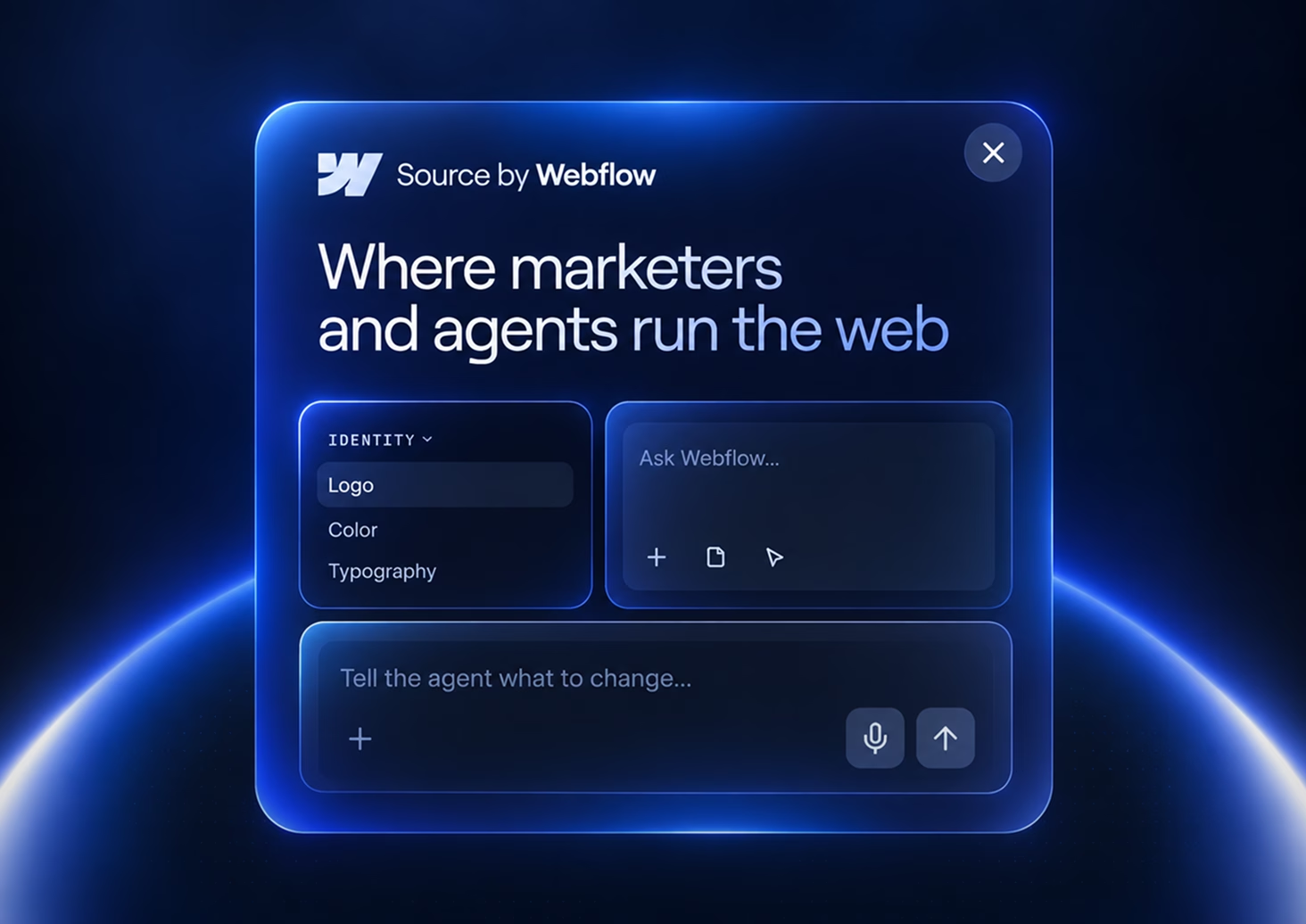

- Source is Webflow's new platform where marketing teams and AI agents build, optimize and run the website together, announced at Webflow Conf on September 2, 2026.
- Agents work directly on the site's code and can monitor performance and draft changes, while brand standards, permissions and approvals decide what goes live.
- Our view after Webflow Conf: agentic marketing is the real step forward, but AI-designed layouts stay generic, so creative direction should stay with people.
- Source is in limited research preview with no public pricing or launch date, and existing Webflow sites keep working as they are.
- The teams that will get the most from Source are the ones with a clean design system, structured CMS and clear ownership in place today.
What is Source by Webflow?
Source is a new Webflow platform where marketers, designers, developers and AI agents work on the website in one shared space. Webflow positions it as a new platform for modern marketing teams and their AI agents.
The difference from today's Webflow is where the work happens. Agents get direct access to the code that actually ships, and people keep editing visually on top of that same code. Webflow describes Source as composable, meaning it connects to your existing CMS, hosting and marketing tools, including sites already built in Webflow.
It is also a shift in identity. Webflow was born as the no-code platform. With Source, code becomes the source of truth, which goes against the idea that created Webflow in the first place. For marketing teams, the visual editing stays. What changes is what happens underneath it.
For a marketing leader, the short version: Source is Webflow's answer to “can AI do more of the web work my team doesn't have time for?”
You can read Webflow's own summary in its Webflow Conf 2026 announcements.
What can marketing teams do with Source?
Source is built around jobs marketing teams already own. Webflow ships default Views for site building, campaigns, content and optimization, and teams can build their own.
Based on what Webflow has shown so far, this is how it maps to day-to-day work:
The goal is not to replace the marketing team. It is to move the repetitive work, like resizing a landing page for a new segment or updating 40 blog posts with a new CTA, from a developer ticket to a reviewed suggestion.
How does Source keep AI changes on brand and safe?
Agents in Source work inside the same rules as your team - the point is that brand standards, permissions and business rules still govern what ships.
In practice, three things matter for marketing leaders:
- Permissions by role. Each person and each agent gets access scoped to their job, so an agent drafting blog updates cannot publish a pricing page.
- Review before publish. Agent suggestions arrive as drafts for a person to approve.
- A visible trail. Webflow is adding agent activity to the site log and showing where agents are working on the canvas in real time, so nobody overwrites anyone mid-edit.
This matters most in regulated industries. On fintech sites like Centinel's, where we built a Trust & Control section covering SOC 2 Type II and GDPR, legal and compliance copy cannot change without sign-off. Approval paths are what make agents usable there.
Is Source available yet, and what does it cost?
Not yet for most teams. Source is in limited research preview, with applications open at webflow.com/source. Webflow has not announced pricing, plan details or a general release date.
Your current Webflow site is not affected. Webflow has said it will keep investing in the existing platform and offer a supported path to Source when it is ready. Several features announced alongside it are arriving sooner, including agent instructions that capture your brand and design system, agent activity tracking and Webflow's AEO tools. Our guide to getting a Webflow site cited by ChatGPT, Claude and Gemini talks about the AEO side.
We will update this article when Source becomes generally available.
Should you wait for Source, or leave Webflow for AI coding tools?
Neither. Source does not change what you should do with your website this quarter, and switching to an AI coding tool trades one set of problems for another.
Teams asking this question usually want two things: faster changes and less dependence on developers. AI coding tools can generate pages fast, but they leave the marketing team without a visual editor, a CMS it can run or guardrails on what ships. That is the gap Source is designed to close inside Webflow.
If a project is planned now, build it now on a structure that will carry over. If you want to understand where Webflow stands overall, our Webflow review covers the whole product.
What do we think of Source, and how will we use it?
I was at Webflow Conf when Source was announced, and I liked what I saw. It is heading in the right direction for how marketing teams will work with AI. The move into agentic marketing is the most interesting part: marketing teams will save a lot of time on workflows they have been waiting on for years.
It also feels built first for in-house marketing teams at enterprise companies, with agencies as a secondary audience. If you run a smaller team, expect the early versions to fit large marketing organizations best.
Two warnings from what we saw:
- AI design is familiar design. When the AI designed inside the product, it kept producing variations of layouts we have all seen before. It reproduces what it already knows. Use agents for speed and variations, and keep people in charge of creative direction if you want a site that stands out.
- Roles will blend. With Views, every role works inside Webflow. Someone who used to make one type of change can now design, publish, run SEO and launch campaigns: a developer or marketer with superpowers. That means more responsibility per person, and you will need to hire for that mixed profile.
Webflow does give agencies a role: connecting a client’s stack, setting up workspaces and agents, and handing ownership to the client’s team. That fits how we already work, because we treat a website as a product that keeps shipping after launch. Once Source opens up, these are the upgrades we plan to offer clients:
- A brand setup agents can follow. We already deliver a design system with every Transform project. With Source, we turn it into the brand rules and agent instructions that every AI change is checked against.
- Workspaces built per role. A campaign View for the growth lead, a content View for the content team, a review View for whoever approves legal copy. Each team sees only the work it owns.
- Agents tied to a metric. In our Expand engagements, every release is tied to a number reviewed monthly. Source agents that monitor performance and draft tests fit that loop. On Kavak's financing vertical, that kind of testing across 15+ landing pages lifted loan volume from 380 to nearly 600 a month.
- Governance set up from day one. Roles, approval paths and publishing rules configured before any agent touches the live site.
Our tip: Agents are only as good as the structure they work on. A site with messy components and unstructured CMS content will get messy AI output. The work that makes a site easy for a marketing team to run is the same work that makes it ready for agents.
How can you get your Webflow site ready for Source now?
Fix the foundations that agents will depend on. All of these pay off today, with or without Source:
- Clean up your component library. Agents build from your components. If you have six versions of the same hero section, they will too.
- Structure your CMS. Consistent fields for posts, case studies and landing pages make content easy for agents to read, update and reuse. Kolibri's marketing team published 30+ ebooks and articles in under eight months without a developer on a CMS built this way.
- Write down your brand rules. Voice, claims you can and cannot make, and approval rules for regulated copy. This becomes your agent instructions.
- Decide who approves what. Name an owner for brand, legal copy and publishing before you add agents.
- Connect your analytics. Agents that suggest changes need data. Make sure conversions and leads are tracked properly in tools like Google Analytics and your CRM.
What should marketing leaders do about Source today?
Apply to the preview if you want early access, but don't pause any project for it. Use the time to get your design system, CMS and approval rules in shape, because that is what decides how much Source can do for your team once it is available.
Plan for blended roles too. The people who run your site will increasingly design, publish and optimize in one place, so look for that range when you hire your next marketer or web lead.
If your site is not ready for that, a Transform project rebuilds it on a structure your team can run today and agents can work on tomorrow.