
The shift Kavak took from a leaking funnel to a flow that converts.
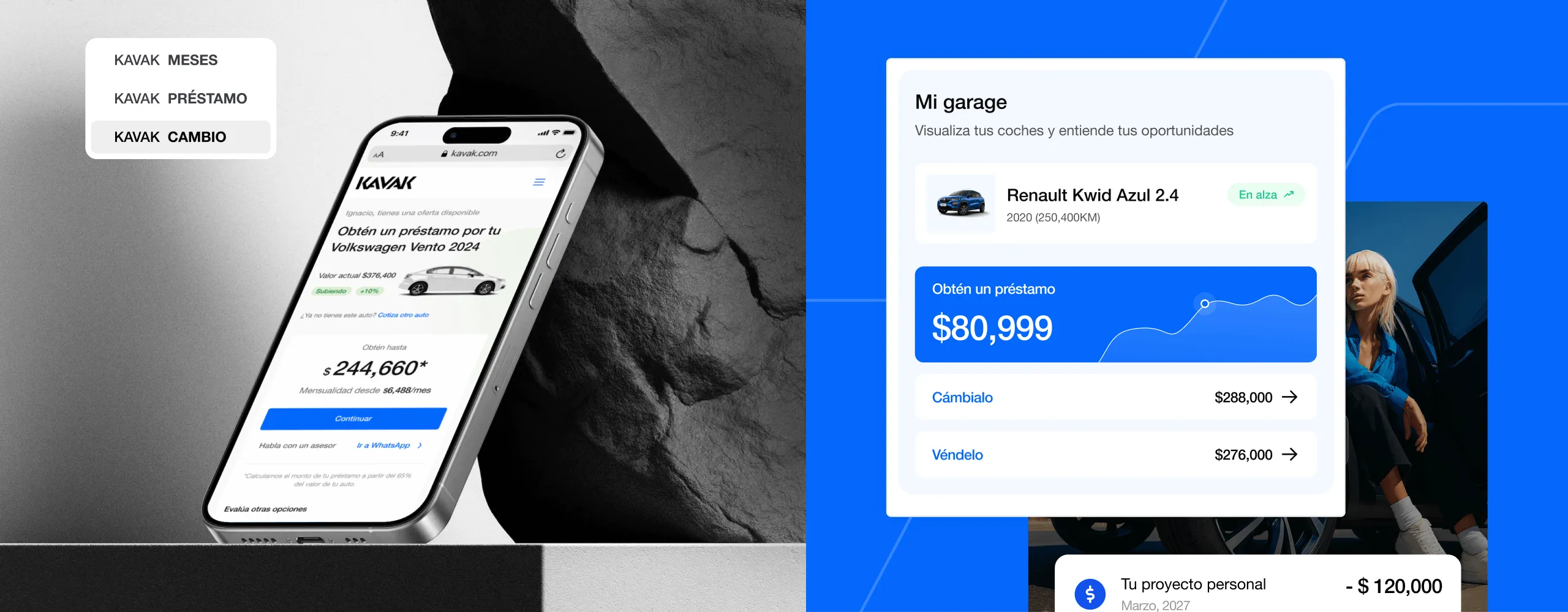

See how we rebuilt the product system behind Kavak's financing vertical, the $1.8B car marketplace, shaping its funnel to lift conversions as their embedded innovation team.
Kavak was founded in 2016 and became Mexico's first unicorn, now one of Latin America's most recognized startups.
Its platform for buying, selling, financing, and servicing used cars operates across the region and in emerging markets, valued at close to US$1.8 billion after its latest rounds. In February, it closed a Series F of US$300 million.
We started working with Kavak in April 2024, embedded as their innovation team with Financing as the main product vertical, and expanded from there into other horizons.
This is why the Kavak strategy wasn’t converting
The team was buried in daily operations and didn't see users landing on product pages with unclear messages, disconnected experiences and confused leads entering broken funnels.
This is why the Kavak strategy wasn’t converting
Users struggled to understand the difference between financing products (auto-equity or car loan). Weak messaging and unclear storytelling buried key offerings across the website.
Outdated user flows created friction throughout the financing journey. High drop-off rates meant users abandoned the process before completing their profile to apply for a loan or finance a car purchase.
Lead volume was high, but quality was low: sales kept capturing people who never qualified for the product.
Technical debt made personalization nearly impossible. Every new idea required unnecessary effort, slowing down experimentation and product innovation.
From one static landing to a relational system
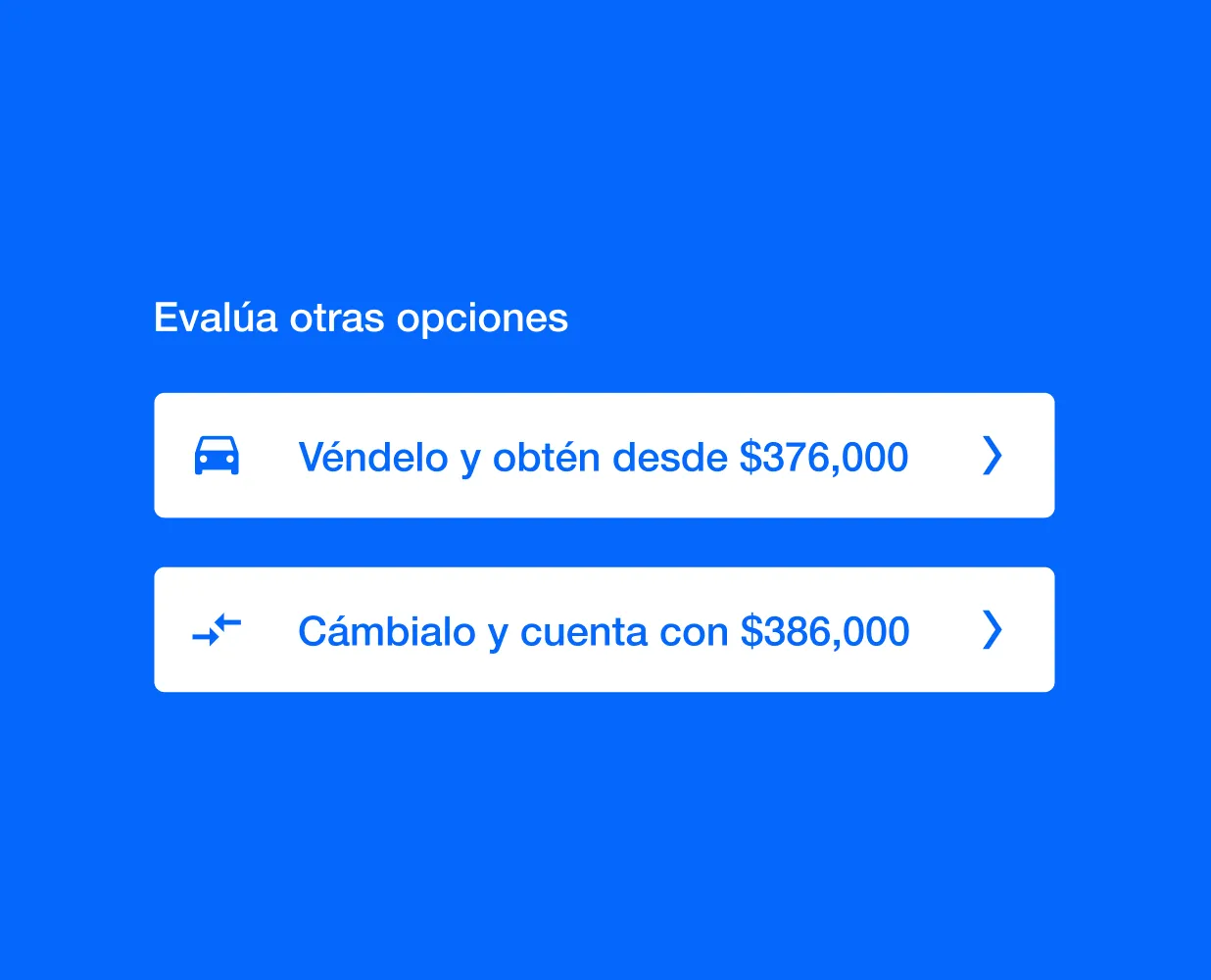
We deployed a relational model that adapts the experience to every user's stage.
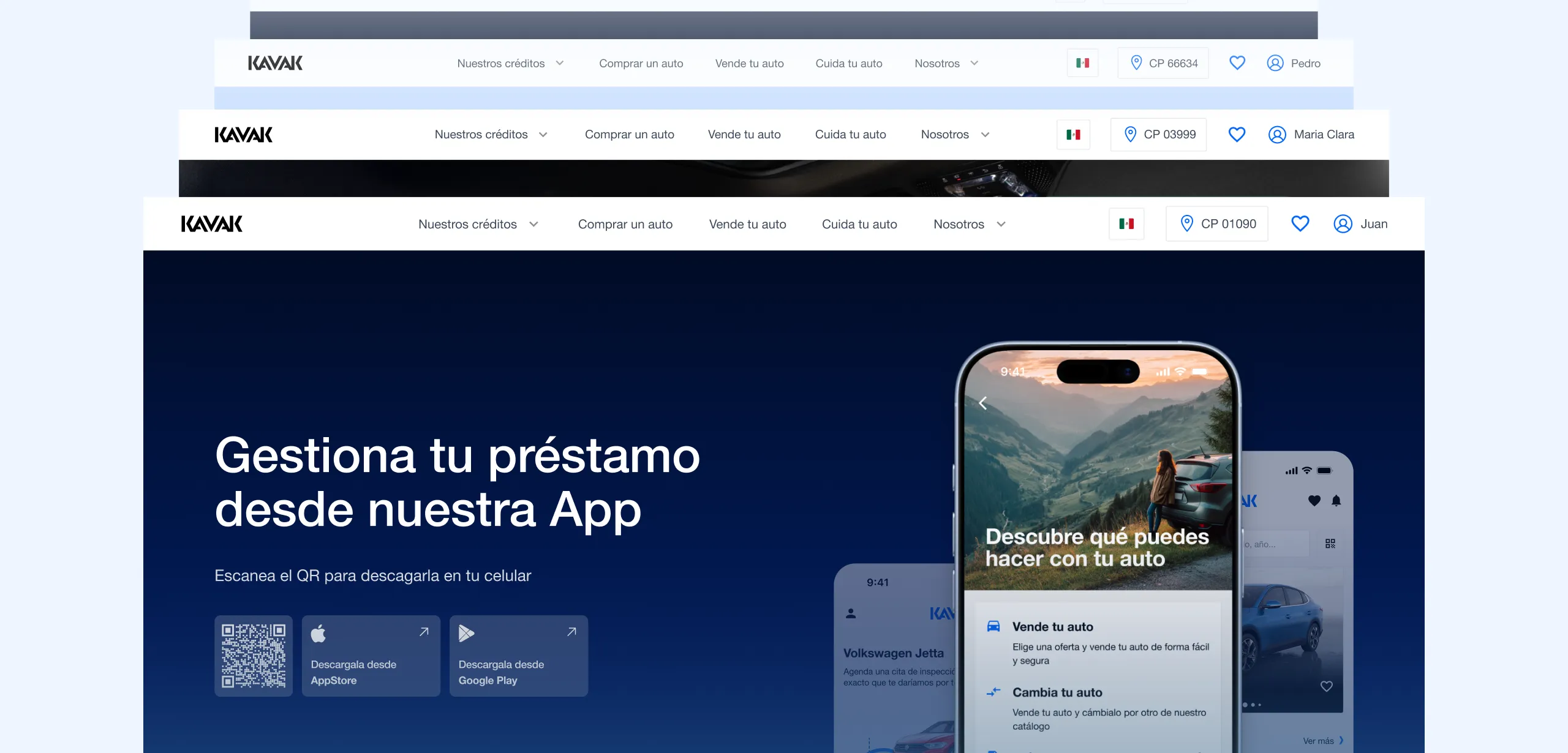
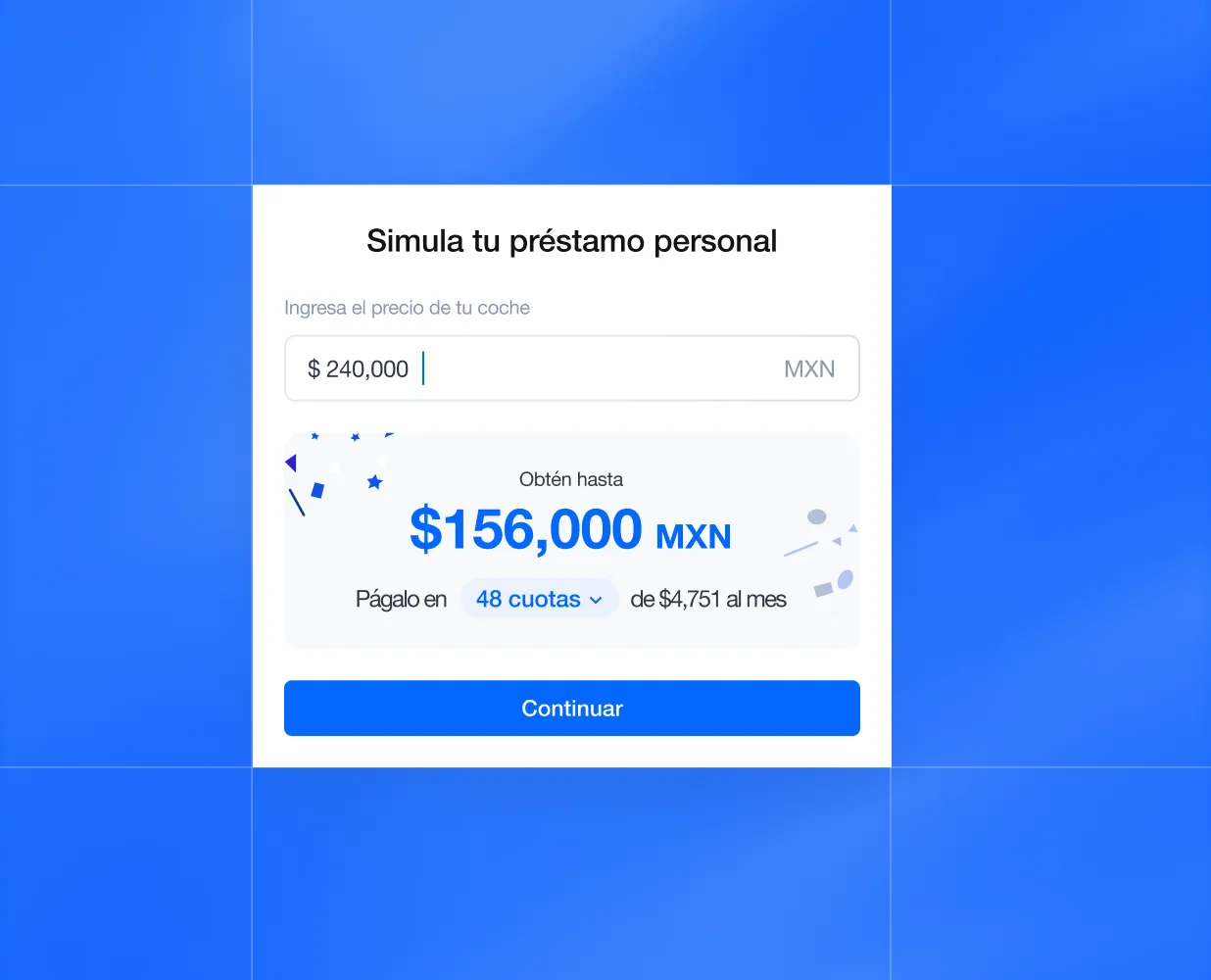
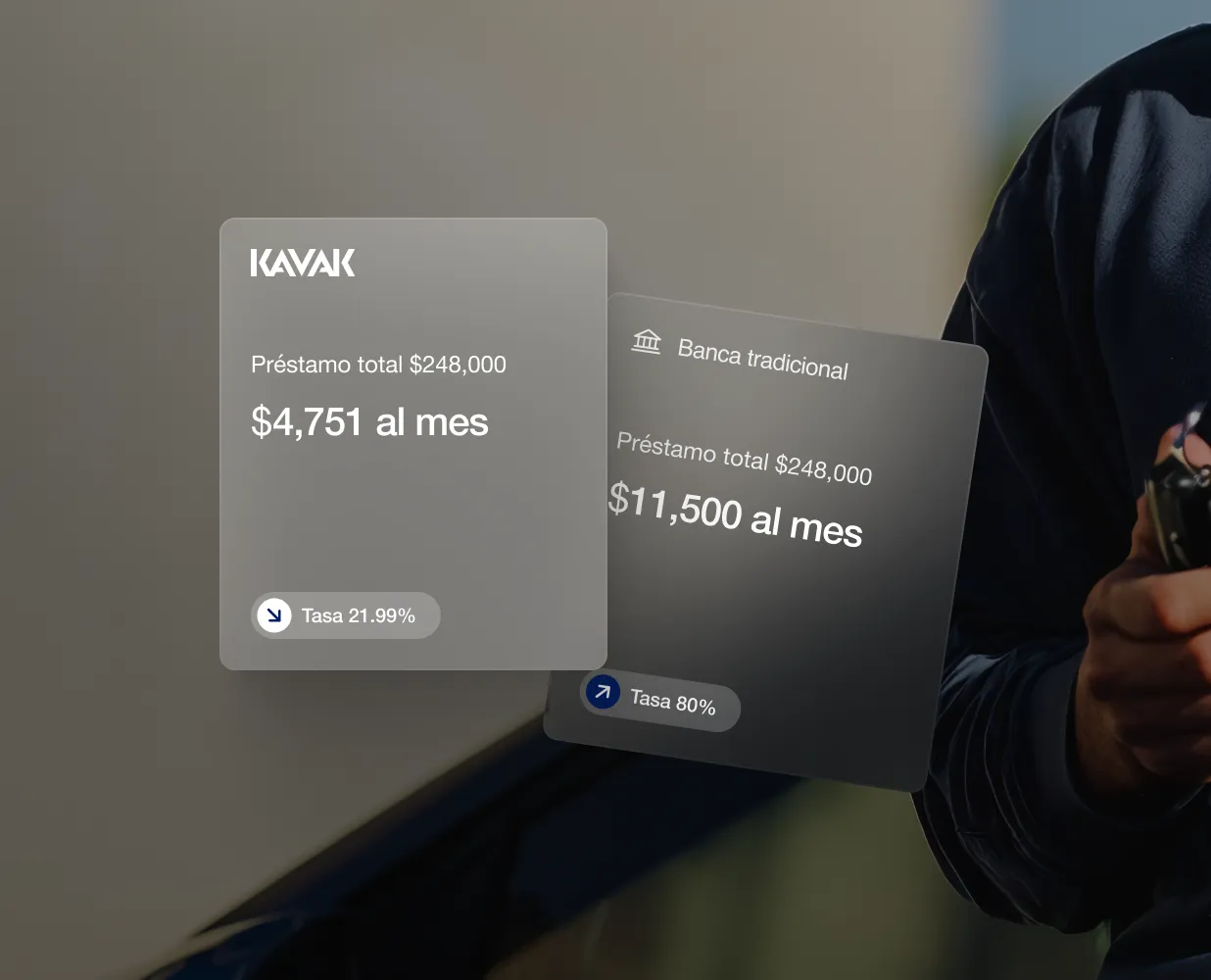
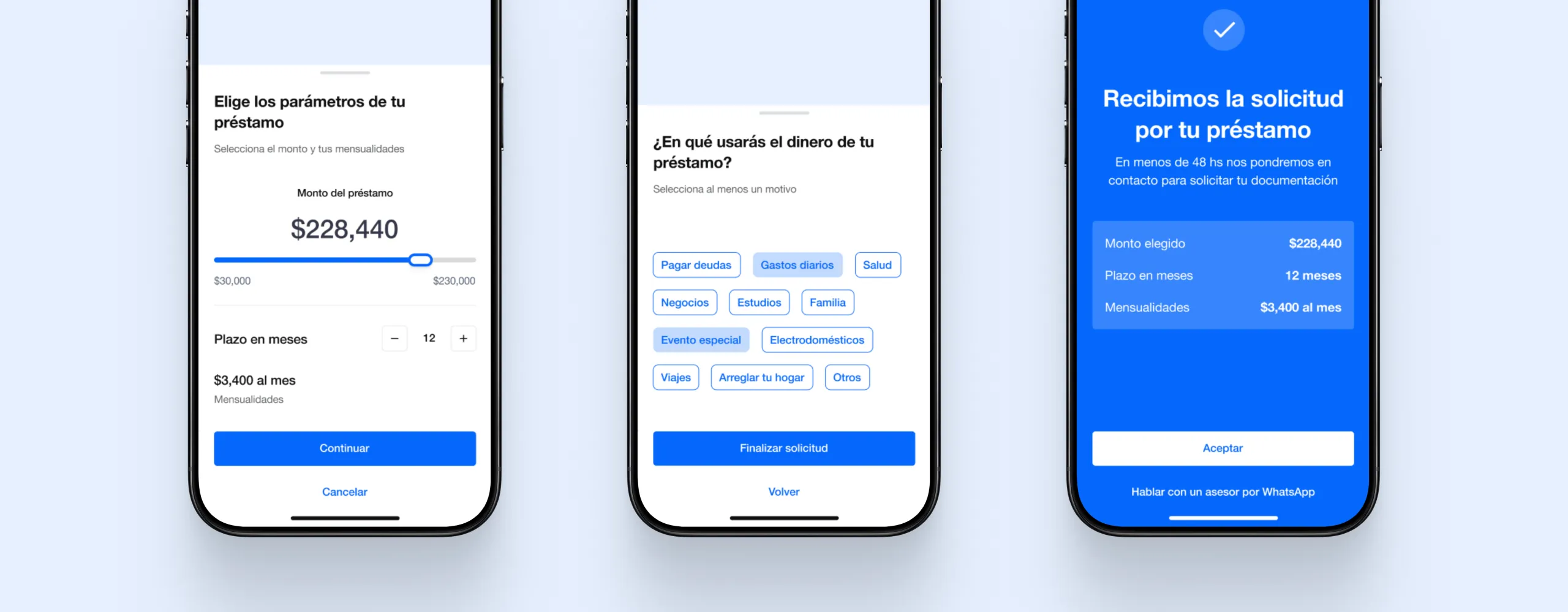
A relational model that treats the AutoEquity landing not as a single page, but as a system that recognizes who's on the other side of the screen.
Instead of serving the same generic experience to everyone, we serve a specific UX based on the user's stage: have they loaded a vehicle? Completed a credit profile? Dropped off mid-flow? We surface the exact UX that helps them perform the task that moves the funnel forward.
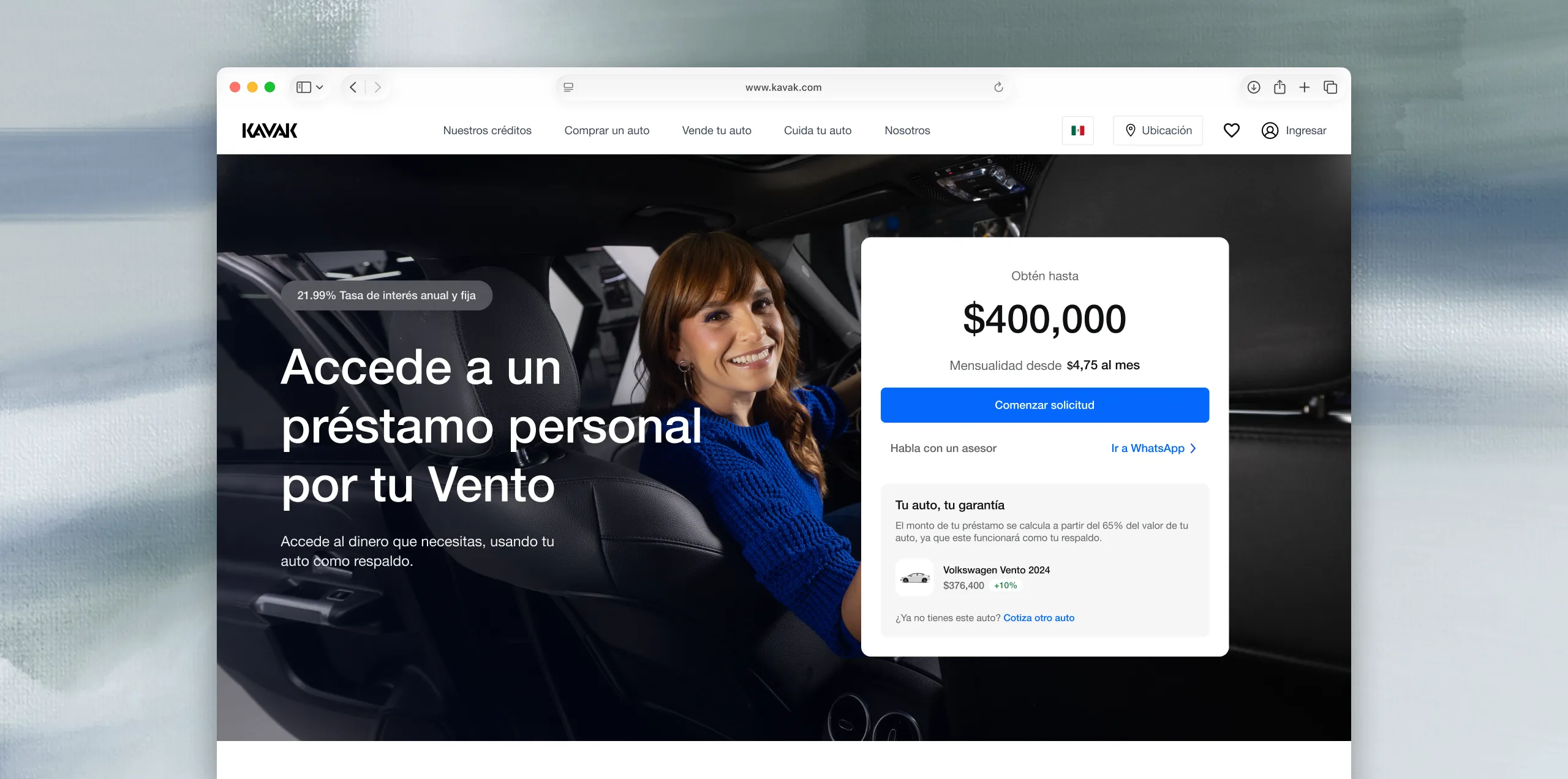
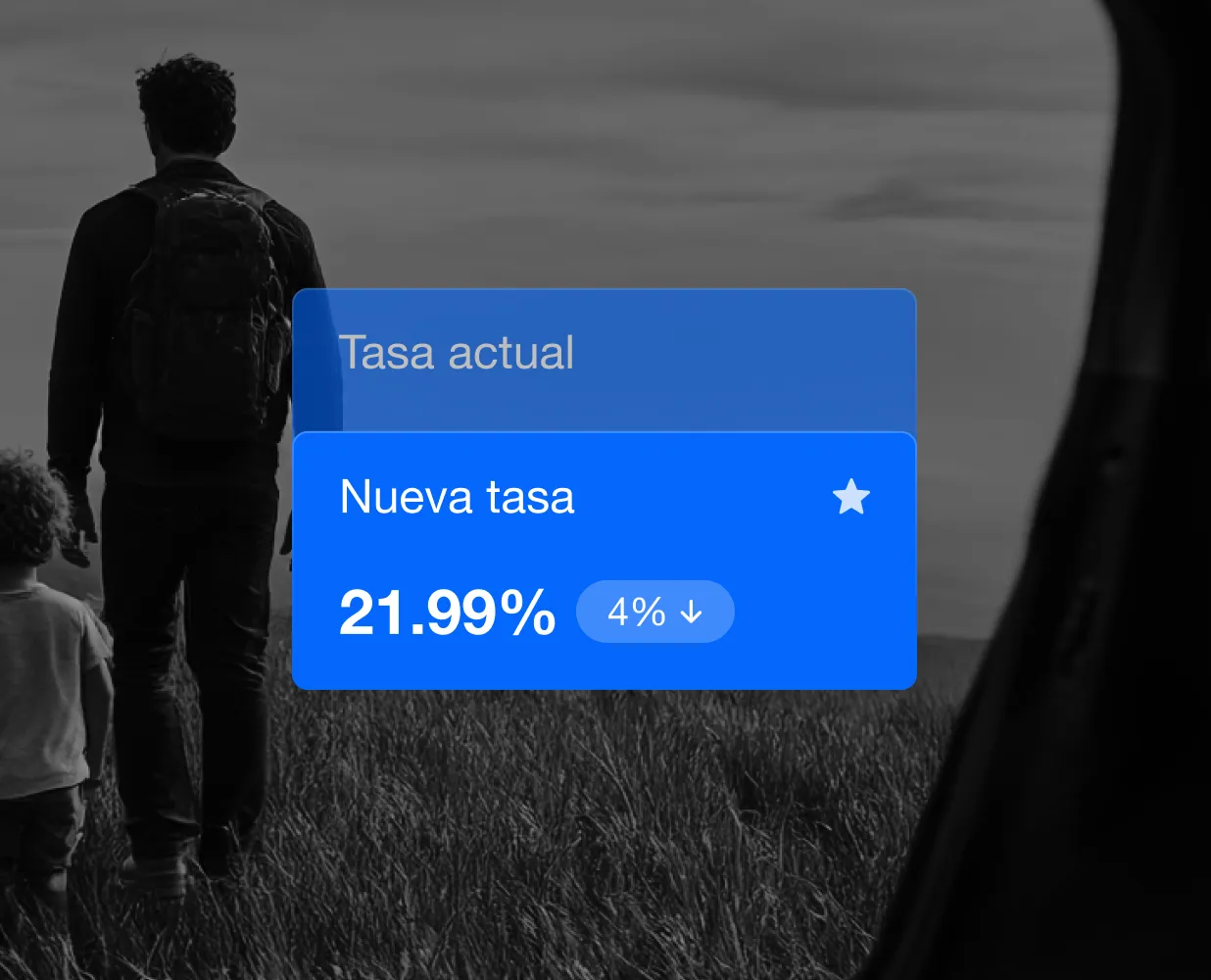
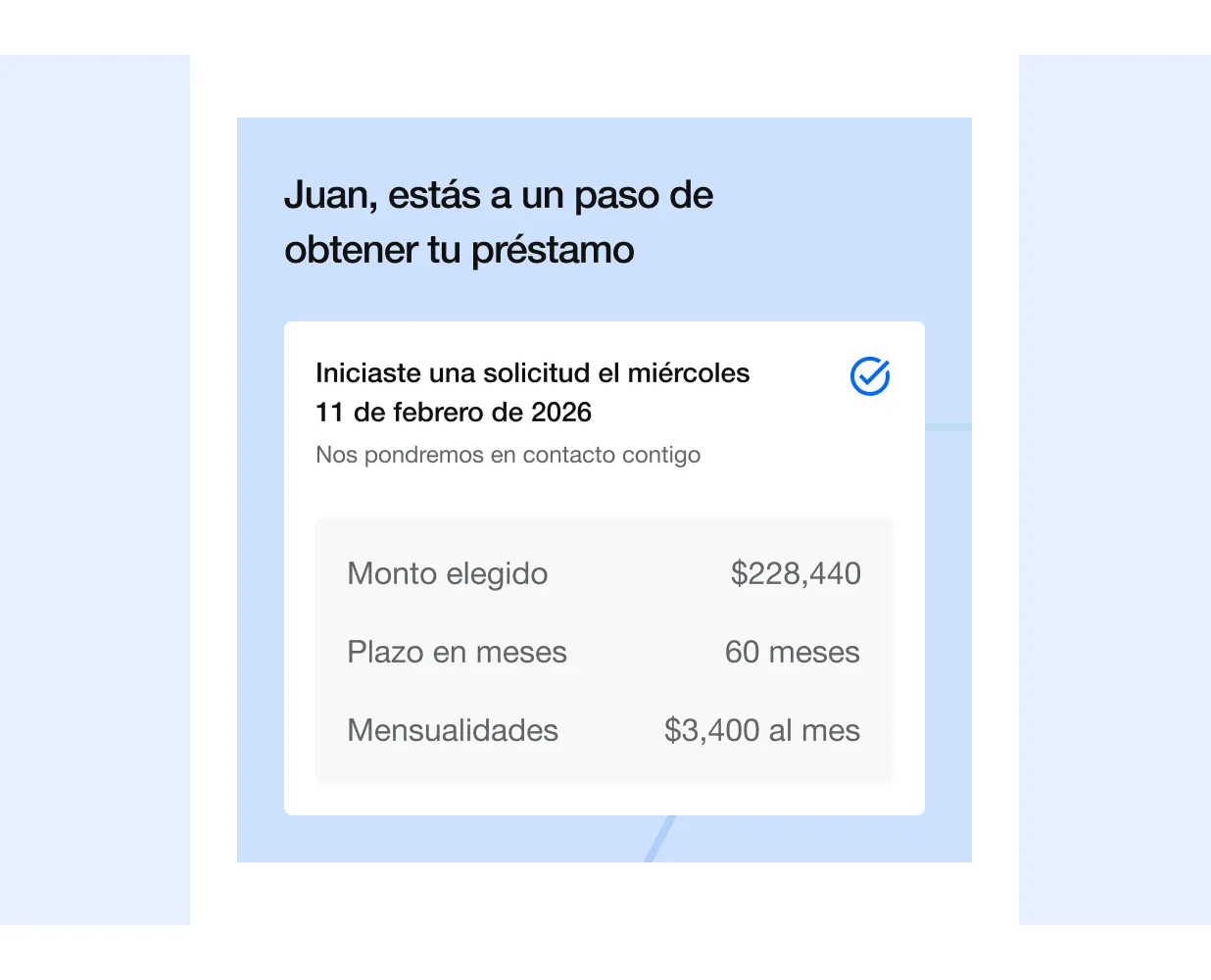
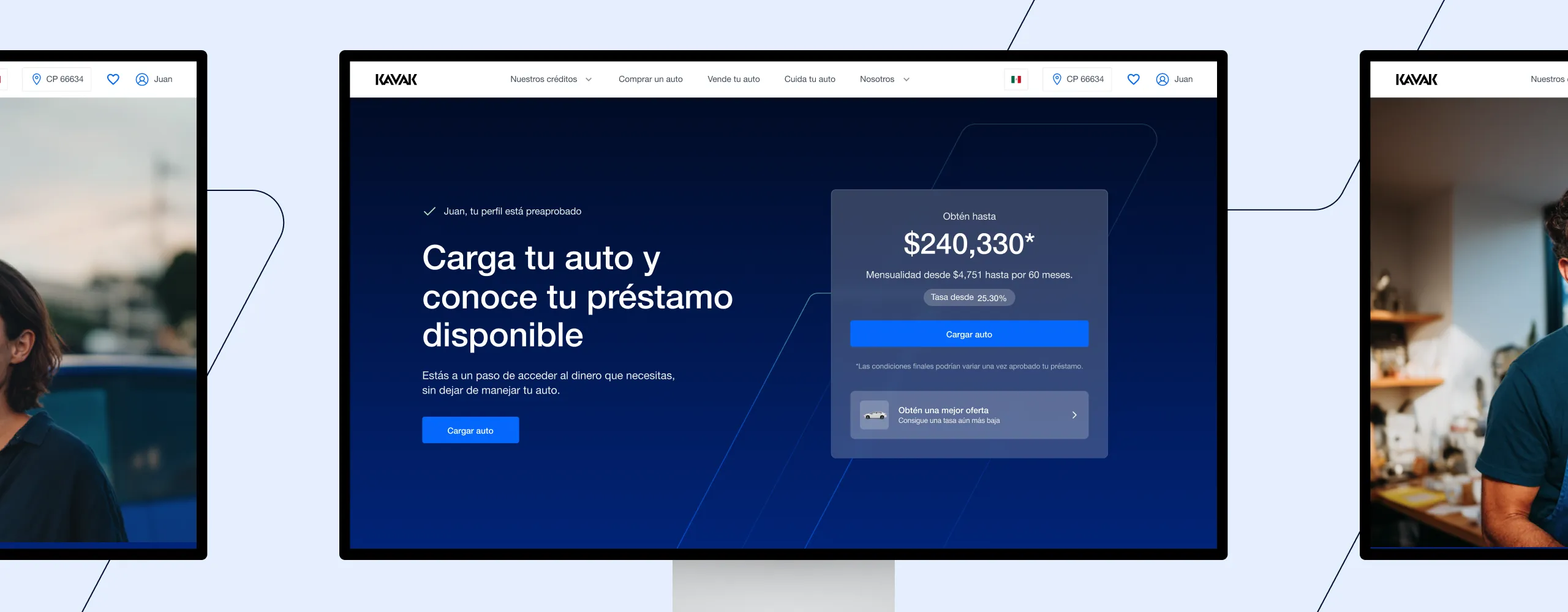
The new engine started converting better at every step where personalization is active.
This turns the landing from a marketing surface into a conversion layer. Every user gets a version of the product that speaks to their context, which removes redundant friction and keeps qualified leads from being treated like cold traffic.
It also lets Kavak read performance by user stage instead of averaging everyone into a single funnel, so decisions get made on real signal. And because the logic isn't tied to AutoEquity specifically, it becomes the foundation for personalizing the rest of the financial ecosystem.
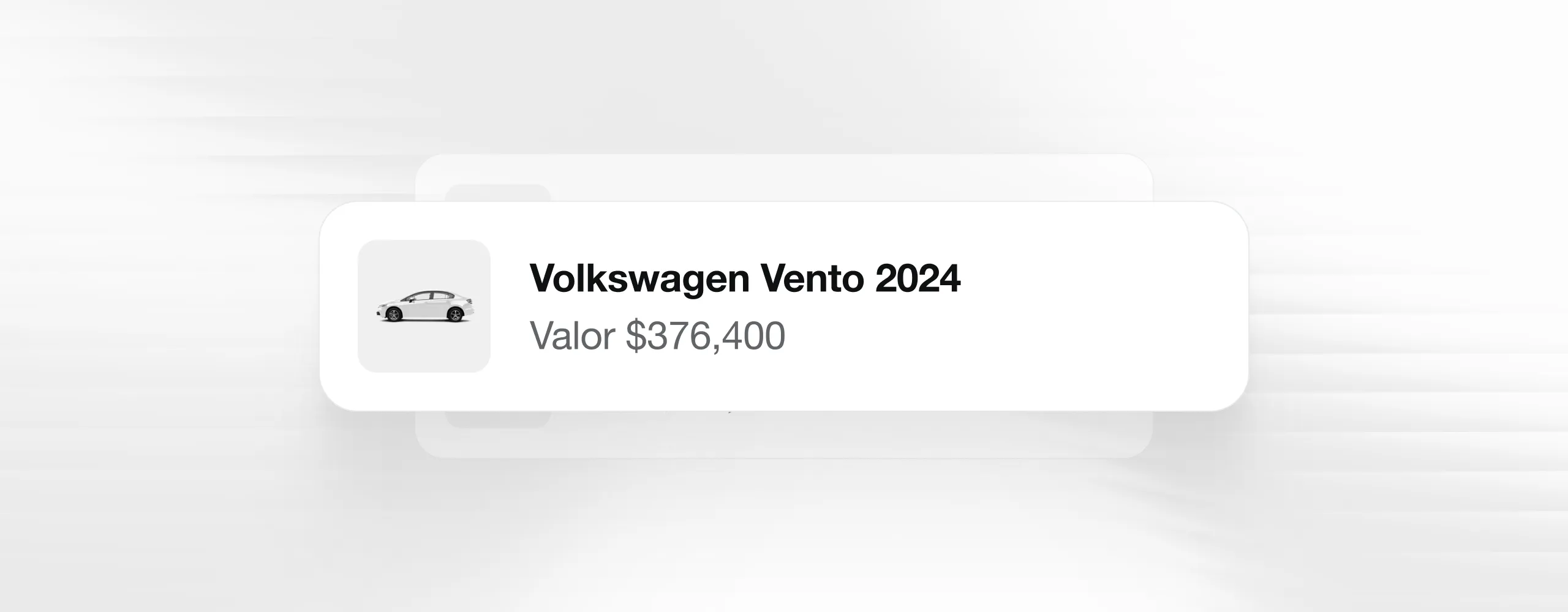
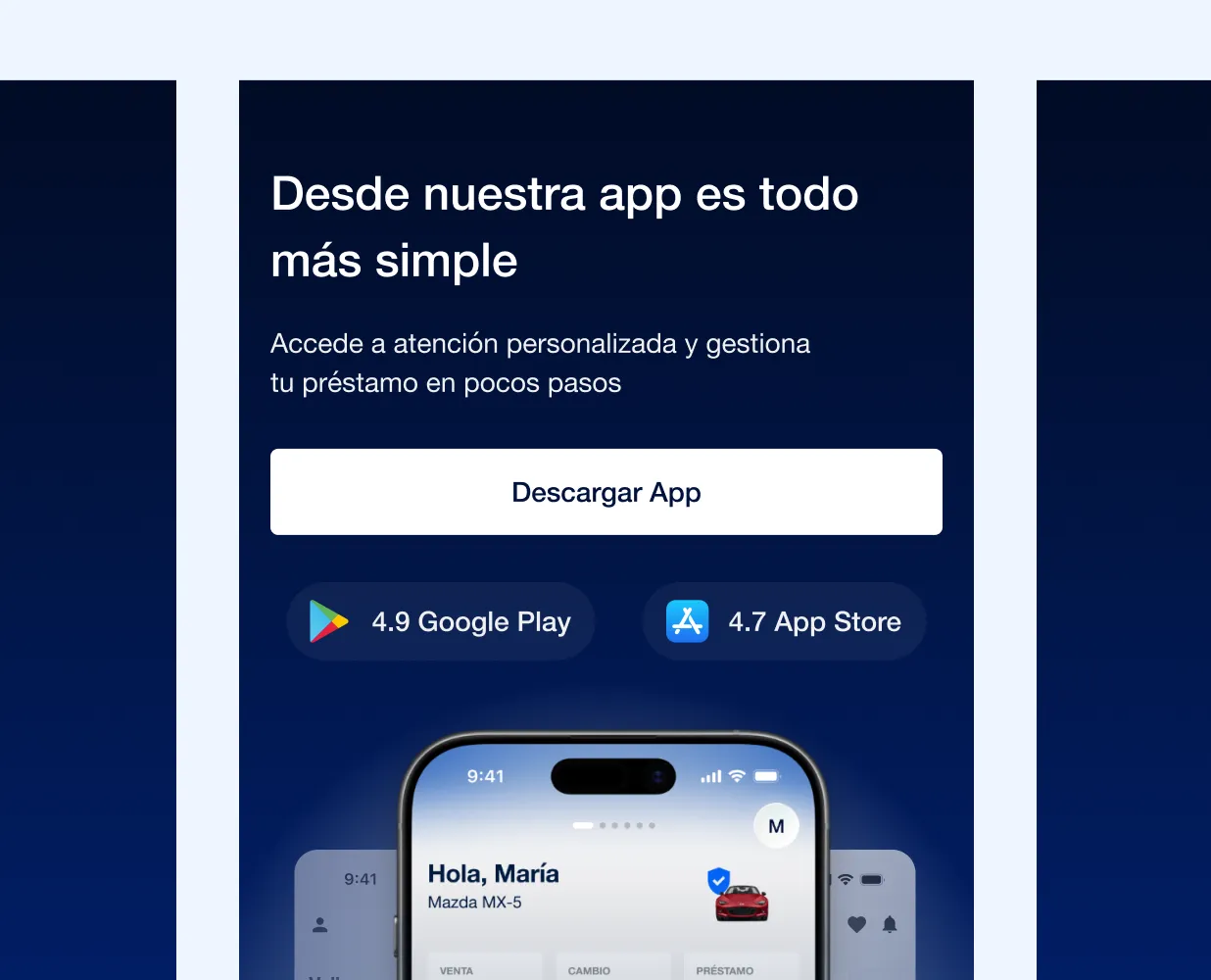
Personalization pays off wherever it's activated. `Users who land on an experience built for their stage click through up to 2.9x more than users who land on the generic page, and once they're in the flow, every step after the click performs better: more completed logins, more completed profiles, higher completion for logged-in users.
in users
